Is Vietnamese a Good Language to Learn: Tips for Beginners
Updated: 4 days ago
Before you invest your time in learning a new language, it's best to consider its pros and cons. If it's not for communicating with your Vietnamese partner or for work, is Vietnamese really worth the effort? Find out below!
Let's be honest. Vietnamese is not a desirable language to learn for career advancement or global reach. However, learning Vietnamese is worth it if you have a clear goal — travel, cultural appreciation, or reconnecting to your roots. Some learners say Vietnamese is intimidating. It is, especially if you're speaking a non-tonal language. But before you walk away from this language and turn on Netflix, consider these things to give it one more try.
Is Vietnamese a Good Language to Learn?

Firstly, if you have Vietnamese roots, learning Vietnamese is a meaningful way to connect with your cultural heritage. Growing up in a Vietnamese family abroad may help you pick up Vietnamese naturally through listening. However, most heritage speakers find that they have limited vocabulary and struggle with reading and writing the words. That's why there's no better way to understand Vietnamese word formation and reconnect with your culture than learning Vietnamese properly.
Learning Vietnamese is essential when you live and work in Vietnam. In big cities like Hanoi or Ho Chi Minh City, you can survive with English, but your daily activities would be extremely limited among expats. Nowadays, more and more people are choosing to set up their businesses in Vietnam. So, it's not unusual to learn the language to communicate effectively with local customers and business partners.
If you come to Vietnam for an ESL position, the schools don't require Vietnamese proficiency. However, speaking basic Vietnamese phrases will help facilitate classroom management, create a warm atmosphere, and foster a better connection with your Vietnamese students.
For a short trip to Vietnam, knowing some Vietnamese phrases for travel is a great start for understanding everyday conversations and getting around more easily. You may also find it useful to learn the pronunciation of famous places in Vietnam to say your next destinations correctly.
Learning Vietnamese for Leisure
Another question you may have is: If you don’t live in Vietnam, is it still worth learning Vietnamese? In other words, can learning Vietnamese as a foreign language be worthwhile simply for leisure? Absolutely! Whether you’re fascinated by Vietnamese culture or simply want to challenge yourself with a new language, learning Vietnamese can be a rewarding and enjoyable experience.
Challenge Your Pitch
If you don't know it yet, Vietnamese is a tonal language. That means the pitch of your voice can completely change the meaning of what you're saying. With six distinct tones, Vietnamese offers a fun challenge that trains your ears to recognize subtle differences in pitch and pronunciation. It will be intimidating at first (just imagine it's like you're singing off track). Once you overcome the initial hurdle, you might find yourself “singing” your way through Vietnamese!
Take a look at the best Vietnamese Songs to Learn to get familiar with the rhythm of the language
Explore a Gateway to Culture
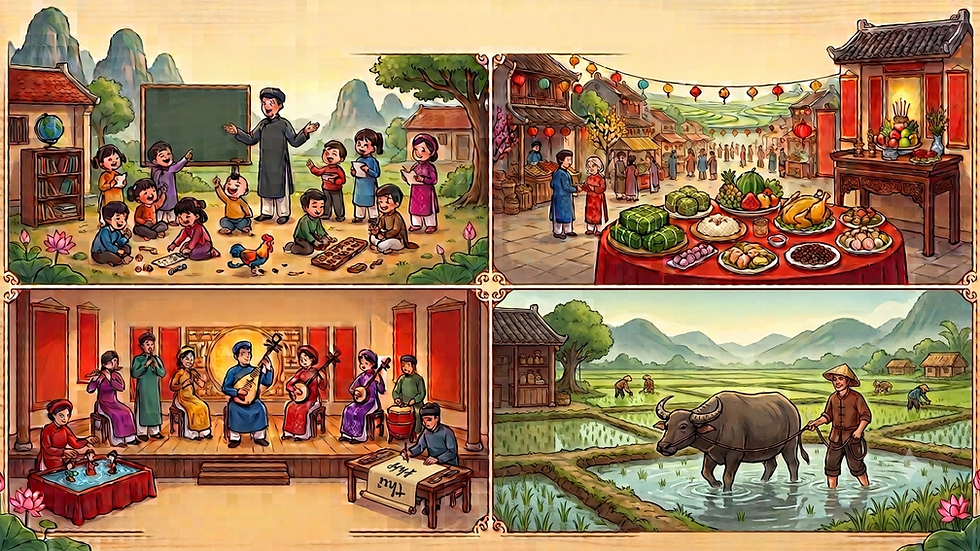
When it comes to learning an Asian language, Vietnamese may not be as widely chosen as Chinese or Japanese. However, if you're interested in cultural discovery, you should learn Vietnamese to read research written in the native language. There are many interesting resources, such as folklore, songs, or poems that have not been translated yet. Knowing Vietnamese allows you to explore content that might otherwise remain inaccessible.
Travel Made Easy and Enriching
Is Vietnamese a good language to learn for travel? A trip may be short, but the friendships you make can last a lifetime. With some Vietnamese greeting basics, you can initiate a warm conversation with local street food vendors or motorbike taxi drivers. This way, you will learn more about their livelihoods and ways of living. Far away from the bustling cities, there are plenty of rural communities with unique customs and traditions. Vietnamese is the only way to communicate with them and truly get to know them.
Connections and Community
Not in Vietnam? Is it worth learning Vietnamese outside the country? There are still many Vietnamese communities abroad, in the US (the largest one, with nearly 2.3 million people of Vietnamese descent as of 2023), Canada, France, Japan, and many other countries. Speaking Vietnamese is a great way to make a first impression and break the ice with descendants around the world.
Vietnamese for Foreign Learners: Difficult or Not?
Many learners have spent years learning without progress. They feel lost when it comes to real-life conversations. What can be the reasons?
Learners' Native Language
You may find these questions around: "Is Vietnamese a hard language to learn for English speakers?" or "Is Vietnamese a hard language to learn for Spanish speakers?" The general answer is "Yes," as you're shifting from a non-tonal language to a tonal one. In English, the rhythm and flow of speech are shaped by the words you choose to stress, depending on the meaning you want to convey or the information you want to emphasize. In a tonal language like Vietnamese, however, each syllable carries its own tone, and changing the tone can change the meaning of the word. If you're used to changing your pitch in six different ways, it's quite tough to get it right.
On the other hand, if you grew up speaking a tonal language, the journey will be far less demanding. Take Chinese as an example. Mandarin has four tones, and Cantonese has six or more tones, aligning closely with Vietnamese's six-tone system. On top of that, many Sino-Vietnamese loanwords have similar pronunciations to Chinese. You can guess the meaning easily based on that similarity.
Vietnamese may be easier to learn if your native language is tonal, while speakers of non-tonal languages may find its tones more challenging.
Regional Dialects
Vietnamese dialects are commonly divided into three major groups based on geography:
Northern Dialect (tiếng miền Bắc)
Central Dialect (tiếng miền Trung)
Southern Dialect (tiếng miền Nam)
Picking up the right dialect is crucial from the start, as you need to learn a different accent and distinct vocabulary. There's no dialect more difficult than the other; it all boils down to which dialect you listen to and use more often.
The northern dialect is considered the standard dialect for formal education, official media, and textbooks, while the central and southern dialects are crucial if you want to live and work in those areas.
The Latin Alphabet

While the six-tone system poses great challenges for English speakers learning Vietnamese, the Latin-based alphabet compensates for it. Unlike many Asian languages that rely on complex character-based scripts, Vietnamese uses a familiar alphabet paired with intuitive diacritics to map out every sound visually. Though there are some differences in the English and Vietnamese alphabets, recognizing the letters is significantly easier than tackling a complex character system.
Grammar and Vocabulary
In addition to the Latin alphabet, a key advantage of learning Vietnamese is its straightforward grammar and vocabulary. Because the language lacks verb conjugations, noun genders, and declensions, actions remain unchanged regardless of context.
Example:
Hôm qua tôi ăn phở bò. (I ate beef phở yesterday.)
Tôi đang ăn phở ở nhà hàng. (I'm eating phở in a restaurant.)
Ngày mai tôi ăn phở với bạn. (I will eat phở with a friend.)
Additionally, vocabulary relies on compound structures. Complex terms are formed by combining simple root words, making new vocabulary easy to decipher as you advance.
Example: From the root "nước" (water/liquid), you can learn the following:
Nước mắt = Liquid + Eye → Tears
Nước ngọt = Liquid + Sweet → Coke
Nước đá = Liquid + Ice → Ice cubes
Best Free Resources to Learn Vietnamese
So now that you have made up your mind about learning Vietnamese seriously, how do you learn it effectively? Free resources to learn Vietnamese are available out there, from the classic Duolingo to many platforms teaching Vietnamese online. The most important thing is to choose what works best for your current level (beginner/intermediate/advanced) and your learning goals (travel/hobby/daily conversation). Try to find what your favorite learning method is, whether it is listening to Vietnamese songs or reading news, northern dialect or southern dialect.
Here are some suggestions:
Giang Ơi Radio (Northern accent)
Tri Kỷ Cảm Xúc (Southern accent)
Vielala: Free Vietnamese Materials for Adults and Children
Vielala's Resource Library brings together audio lessons, stories, worksheets, and interactive games for both adult and child learners — all free, and organized by level so you can jump straight to content that matches where you're at.
Materials focus on practical, everyday Vietnamese with clean, accurate English translations rather than clunky machine-translated text. Worksheets are downloadable, so you can study offline or print them out for practice.
The question "Is Vietnamese a good language to learn?" may appear at any stage of your language journey — before you sign up for the first lesson or even halfway through the course when you feel overwhelmed by the challenges. If you find yourself asking this question, don't panic! Just try to find a reason that makes you love learning the language.
Conclusion: Embrace the Journey
Learning Vietnamese is not just about mastering a language. It's about embracing a journey filled with cultural richness and personal growth. So, why not take that first step? Dive into the world of Vietnamese, and who knows what amazing experiences await you!